






Geographical location of Golestan province
Golestan province is one of the northern provinces of Iran, which was separated from Mazandaran province in 1376 and Gorgan was chosen as its center. Most of the people of this province follow the Shia religion, and a part of its population is Sunnis. In the past, this region was known as Gorgan, Jurjan and Estrabad and has a valuable historical background. The cities of Gorgan and Gonbadkavus are among the most important historical cities of the province, while many other cities were formed from the expansion of villages. Golestan is considered one of the most important provinces in the north of the country with cultural diversity, different ethnicities and lush nature.
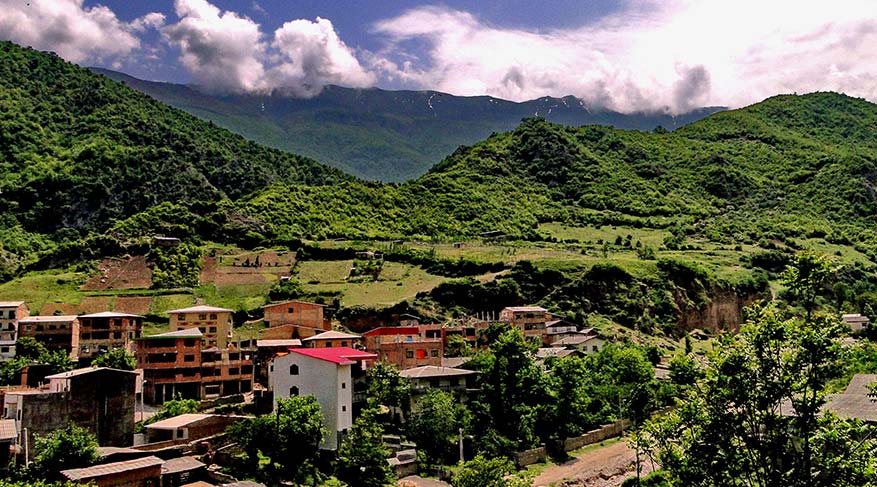
Geographical location of Kavos Dome
Kavus Dome or Qaboos Dome located in Golestan province According to the census of 2010, its population was about 144,546 people.
Kavus Dome is the largest city Golestan province and the center Desert Turkmen It is also the tallest brick tower in the world called Qaboos Tower located in this city.
In the past, the city of Hirkan and then Jurjan was located in this place, which was very important due to its location on the Silk Road. During the reign of Reza Shah Pahlavi, a new city was built near the ruins of ancient Gorgan, which was named Kavos Dome. Kavos Dome was the capital of Iran during different eras, during the reign of Al-Ziyar dynasty. Among the scholars and scientists who were in this city, we can mention Turkmen poet Makhtoumaghli Faraghi, Sheikh Fakhreddin Asad Gorgani, and Abu Ali Sina, an Iranian scientist, philosopher and doctor who stayed in this city for a long time. Also, the government of men such as Amir Sanratul-Maali Kikavus bin Sekander bin Vashemgir with the famous book Qaboos Namah which he wrote for his son Gilan Shah, and among the religious scholars of the present age, one can mention the first founder of Eid prayer and Friday prayer, Sayyid Nazar Akhund Yalmeh, who was educated in Bukhara Sharif and Khiva, he died in 1331.
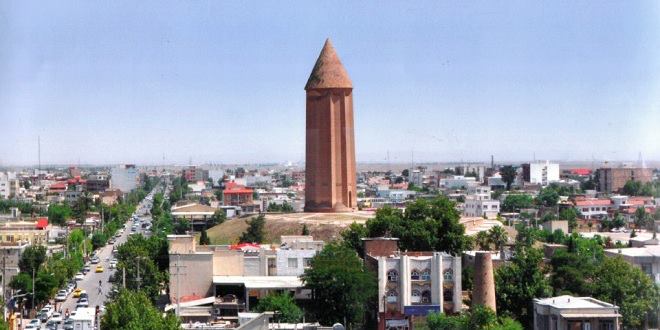
Qaboos Brick Tower, which is probably the burial place of Sultan Al-Ziyari, Qaboos bin Vashamgir, which is the oldest tomb tower of the Razi style and its height reaches 60 meters, was built between 1006 and 1007 AD. The city of Gonbad Qaboos, which was created later after Jurjan and was considered a part of the old Gorgan region and also a symbol of Iran and the world civilization, was razed to the ground after some time due to an earthquake, and then it was destroyed by the attacks of Mongols and then Timur, and later, the current Qaboos was gradually formed near the previous city and developed. After many years, the remains of the previous city were discovered in the eastern part of Gonbad Qaboos.
The current city was founded in 1305 AH by the order of Reza Shah Pahlavi, and thanks to Qaboos bin Vashmegir, it was named Qaboos Dome (which has now been changed to Qavos Dome). The main map of this city was designed by German experts, according to the principles of urban planning.
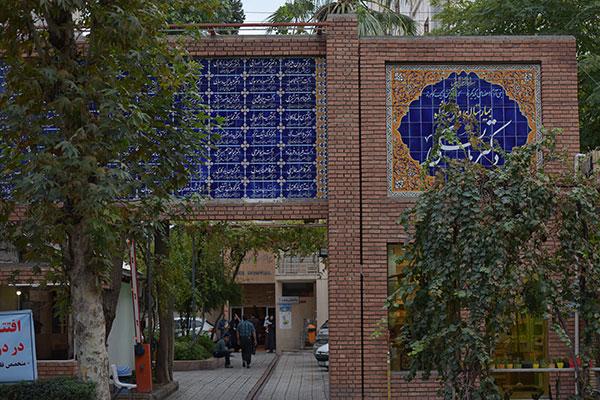
Beski Hospital It is located in Golestan province, Gonbad Kavus city.
the weather
The average annual air temperature in Kavos Dome is 6.18 degrees Celsius. The average annual maximum air temperature is 5.24 degrees and the average annual minimum is 7.7 degrees. The difference between the maximum and minimum annual temperature is 11.8 degrees. The average temperature in the coldest month of the year i.e. June is 1.8 degrees and in the hottest month of the year i.e. August is 29.9 degrees Celsius.
Vegetation and green space of Kavos Dome
The pastures of Gonbadkavus county with an area of 556,797 hectares are located in steppe and semi-steppe climatic conditions, and according to the climatic conditions and the type of vegetation that dominates it, it is considered one of the Qashlaqi pastures of Golestan province.
These pastures are limited from the north side to the border of the Republic of Turkmenistan, from the south side to the natural resources area of Azadshahr and Minodasht, from the east side to the area of the pastures of Kalaleh and Marave Tepe, and from the west side to the natural resources area of Agh Qola and Azadshahr.
According to the pasture unit of Gonbedkavus Natural Resources and Watershed Administration, these pastures have different plant species, and in this report we will get to know some of its key species.
Vegetable pecan
It is a plant of the genus Kich with a height of about 30 to 50 cm. Its appearance is bush-like, with green leaves with narrow and long irregular divisions. Its flowers are large and have thin sepals and large greenish-white petals, its fruit is covered and contains many black seeds.
wheat flower
It is a plant from the chicory family, hairy grass with alternating leaves. This plant is one or two year old medicinal plants that has a branched stem with a height of 25 to 80 cm. The stem of this plant is whitish green and the flowers of this plant are bright blue. This plant is mostly grown in wheat and grain fields and for this reason it is known as wheat flower.
camel thorn
Kharster or Adore is a plant from the legume family. Its other name is manjabin grass. The fruit of this family is unblooming. Its bushes are semi-shrubs and semi-woody, reaching a height of 50-150 cm. Its stems are green with thorns with yellow tips. It is diuretic and against whooping cough, fever and chills. Its leaves are hairless, bell-like and with five short pointed triangular seeds.
salt grass
It is a one-year fleshy herbaceous plant from the spinach family with a wooden base and completely straight stems that are wide at the base. This plant has narrow, small and compact leaves that grow for a long time of the year and are fertile in autumn. It is a tasty plant that is always overgrazed